1. Make sure all supplies (fittings, capillaries, inline filters, columns, etc.) are bio-inert / biocompatible.
inert [ɪˈnɜːrt] : 비활성의
bio-inert : 생물학적으로 아예 반응·영향이 없음
biocompatible : 생물과 함께 써도 문제가 없음
모든 소모품(피팅, 캐필러리, 인라인 필터, 컬럼 등)이 바이오-이너트 / 바이오컴패터블 재질인지 확인하라.
1-1. Be aware that some columns for bio-related applications have a stainless steel case and can introduce iron and other metal ions in the flow path. This may lead to adsorption of susceptible samples like phosphorylated nucleotides. In this case, use PEEK-lined columns.
SS = stainless (녹슬지 않는) steel (금속)
=> “녹슬지 않는다” ≠ “금속 이온이 안 나온다”
metal ions (금속 이온): Fe³⁺, Ni²⁺ 등
=> 이동상이 금속과 접촉하면서 미량 이온 용출
adsorption [ædsɔ́:rpʃən] : 흡착
susceptible [səˈseptəbl] : 영향을 받기 쉬운, 민감한
phosphorylated : 인산화된
nucleotides : 뉴클레오타이드
=> 인산기(PO₄³⁻) = 음전하 + 금속 친화성 매우 큼
PEEK = polyether ether ketone
바이오 관련 분석용 컬럼 중 일부는 스테인리스 외관을 가지고 있으며, 유로 내로 철 및 기타 금속 이온을 유입시킬 수 있음을 인지하라.
이는 인산화된 뉴클레오타이드와 같이 민감한 샘플의 흡착을 유발할 수 있다.
이런 경우에는 PEEK 라이닝 컬럼을 사용하라.
=> 스테인리스에는 Fe(철), Ni(니켈), Cr(크롬) 포함되어있는데 이동상(특히 buffer, salt, 낮은 pH)과 접촉 시
미량 금속 이온 용출될 수 있다.
-> 이 때 인산화 화합물은 금속 이온과 강한 배위결합을 하게되면 시료 일부가 컬럼 입구, frit, 금속 표면에 흡착하여
-> 피크 면적 감소, 재현성 불량, tailing 증가, low-level compound 미검출
=> PEEK (polyether ether ketone)
- 금속 없음
- 이온 용출 없음
- 단백질·핵산·인산화 화합물 흡착 최소
=> PEEK-lined 구조
- 외부는 강도 확보용 SS
- 내부 유로만 PEEK로 차단
: 금속과 시료가 직접 접촉하지 않음
2. After using the system with high salt concentrations, flush it extensively with water to prevent blockages caused by salt crystals.
extensively [ɪkˈstensɪvli] : 광범위하게
고농도 염을 사용한 후에는 염 결정에 의한 막힘을 방지하기 위해 물로 충분히 플러시하라.
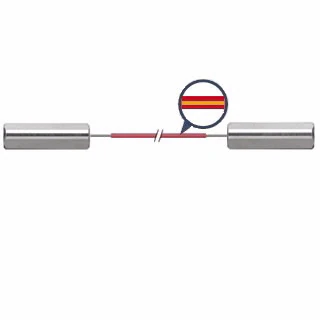
3. Reliable operation of 1290 pumps during analysis cannot be guaranteed if pressure falls below 20 bar. For optimal results, pressure should be at least 50 bar continuously. Therefore, when using columns that create low backpressure (<50 bar, such as SEC columns with 1290 LC systems), install a Restriction Capillary MP35N 0.12 mm x 2 m (5005-0046) between the pump and the sampler, to achieve at least 50 bar.
Reliable operation : 신뢰성 있는 작동
optimal : 최적의
분석 중 압력이 20 bar 이하로 떨어지면 1290 펌프의 신뢰성 있는 작동은 보장되지 않는다. 최적의 결과를 위해서는 압력이 지속적으로 최소 50 bar 이상이어야 한다. 따라서 1290 LC 시스템에서 SEC 컬럼처럼 낮은 배압(<50 bar)을 만드는 컬럼을 사용할 경우, 최소 50 bar를 확보하기 위해 펌프와 샘플러 사이에 제한 캐필러리(MP35N 0.12 mm × 2 m)를 설치하라.
4. Perform daily flush of the Multisampler with water if the Multiwash option is installed (see “Multiwash” on page 14).
멀티워시 옵션이 설치된 경우, 멀티샘플러를 매일 물로 플러시하라.
5. For all quaternary pumps, follow recommendations to maintain MCGV free of salt crystals, see “Recommendations for MCGV” on page 9
모든 quaternary pump에 대해 MCGV를 염 결정 없이 유지하기 위한 권장사항을 따르라.
CAUTION
Agilent Bio-inert and Bio LC systems should not be subject to passivation or similar procedures. This can cause irreversible damage to the system's internal surfaces. Do not perform passivation or similar procedures on bio-inert and biocompatible systems.
subject to : ~의 영향을 받기 쉬운 / ~을 조건으로 하는 / ~의 대상인
passivation [pæsɪˈveɪʃən]
금속 표면을 화학적으로 처리하여, 금속 이온(iron, nickel 등)이 용출되거나 시료와 상호작용하지 않도록 불활성 산화막을 형성하는 처리
irreversible [ɪrɪˈvɜːrsəbl] : 비가역적
Agilent 바이오-이너트 및 바이오 LC 시스템은 패시베이션 또는 유사한 처리를 해서는 안 된다. 이는 시스템 내부 표면에 돌이킬 수 없는 손상을 초래할 수 있다. 바이오-이너트 및 바이오컴패터블 시스템에서는 패시베이션이나 유사한 처리를 수행하지 마라.
Flushing Procedure
1. This procedure should be used when salt-containing mobile phases are used. It has to be performed regularly, at least once a week, or prior a long standby or off time, to remove salt deposits from the flow path and surfaces in contact with the solvents. How to prepare the system for shutdown see “Shut Down the System” on page 7.
이 절차는 염이 포함된 이동상을 사용할 때 적용해야 한다. 유로 및 용매 접촉 표면의 염 침착물을 제거하기 위해 최소 주 1회 또는 장시간 정지 전 반드시 수행해야 한다.
2. The procedure is mandatory for switching from salt-containing mobile phase to reversed phase applications (or any applications running with high organics), where the precipitation of salt can occur.
염 포함 이동상에서 역상 분석으로 전환할 때 이 절차는 필수이다.
3. Flush the column with recommended storage solvent, be sure that this solvent is compatible with current mobile phase and cannot cause precipitation.
권장된 보관 용매(storing solvent)로 컬럼을 플러시하되,
그 용매가 현재 사용 중인 이동상과 서로 상용성(compatibility)이 있으며 침전(precipitation)을 일으키지 않는지 반드시 확인하라.
4. Replace the column with a union, replace the salt-containing solvent bottle with a new bottle of HPLC-grade water at room temperature.
컬럼을 제거하고 대신 유니온(union)을 연결한 뒤,
염이 들어 있는 용매 병을 실온의 HPLC급 물이 담긴 새 병으로 교체하라.
5. Clean the bottle head assembly using lint-free wipes to minimize carryover of remaining salt solution into the new water bottle.
bottle head assembly를 lint-free wipe로 세척하여,
남아 있는 염 용액이 새 물 보틀로 이월(carryover) 되는 것을 최소화하라.
6. Autosampler: perform at least 15 min purge with water to remove salt residues from all lines, both needle wash and seat backflush for Multiwash option, visually control needle/seat/washport for salt residues, if necessary manually clean needle/seat/washport.
오토샘플러의 경우, 모든 라인에서 염 잔류물을 제거하기 위해 최소 15분간 물로 퍼지를 수행하라. 멀티워시 옵션이 있다면 니들 워시와 시트 백플러시 모두 수행하고, 니들·시트·워시포트에 염 잔류물이 있는지 육안으로 확인하라.
필요 시 니들·시트·워시포트를 수동으로 세척하라.
7. Purge each pump channel that has pumped buffer separately, for at least 10 min at 5 mL/min.
버퍼를 흘렸던 각 펌프 채널을 개별적으로, 유속 5 mL/min에서 최소 10분간 퍼지하라.
8. Flush the entire system flow path with water for at least 10 min at 2 mL/min. During this step, switch the injection valve and the column selection valve (if installed) position every 1 min, and repeat this until every position has been selected for at least 5 times.
시스템 전체 유로를 유속 2 mL/min에서 최소 10분간 물로 플러시하라. 이 과정 동안 주입 밸브와 컬럼 선택 밸브(설치된 경우)의 위치를 1분마다 변경하고, 각 위치가 최소 5회 이상 선택되도록 반복하라.
9. Replace water with fresh solvent bottles to minimize salt carryover.
염 이월을 최소화하기 위해, 물을 제거하고 새로운 용매 보틀로 교체하라.